We welcome critical engagement. Reproduction attempts, methodological critiques, and theoretical extensions are encouraged.
All substantive comments are posted publicly with author attribution (optional).
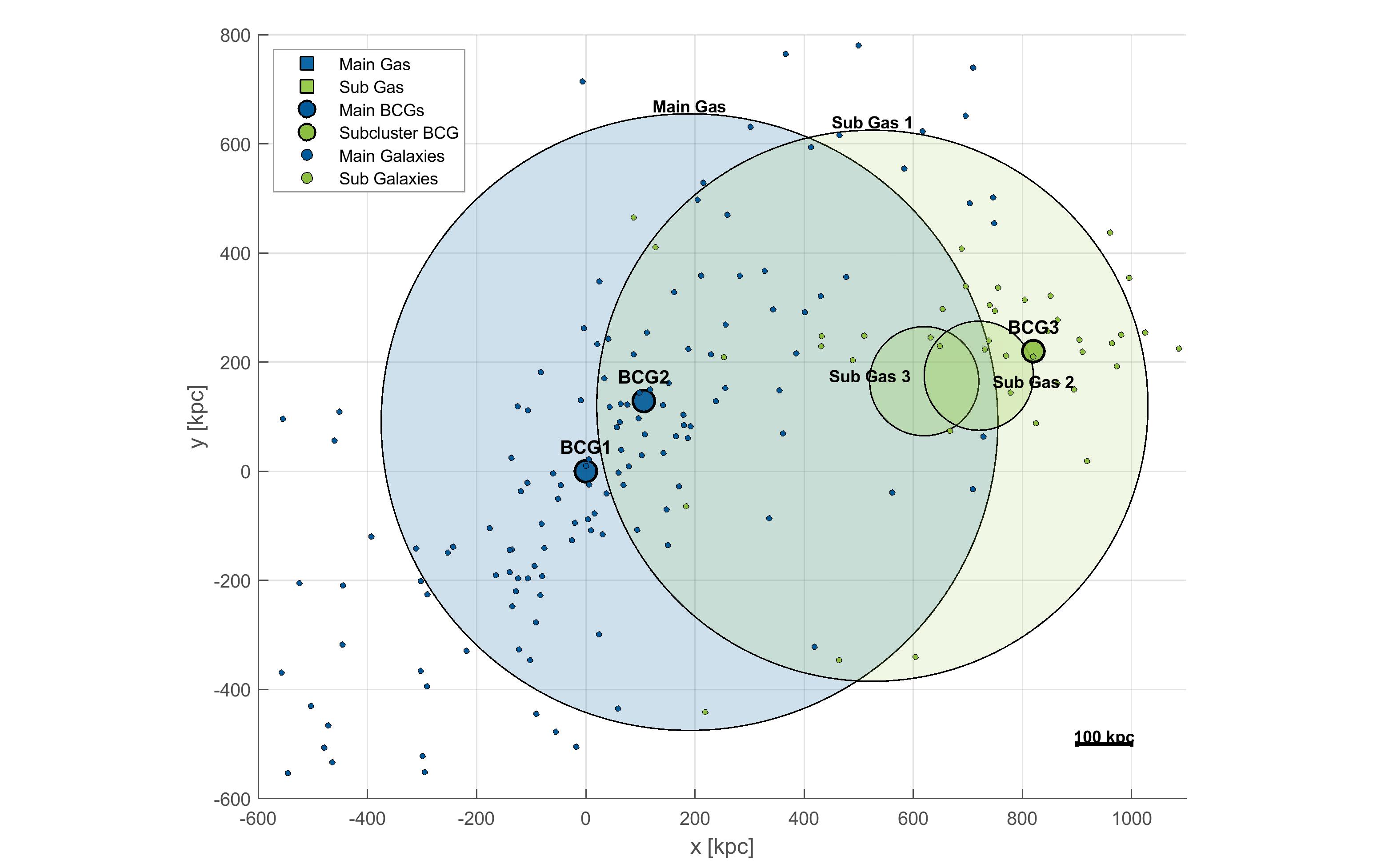
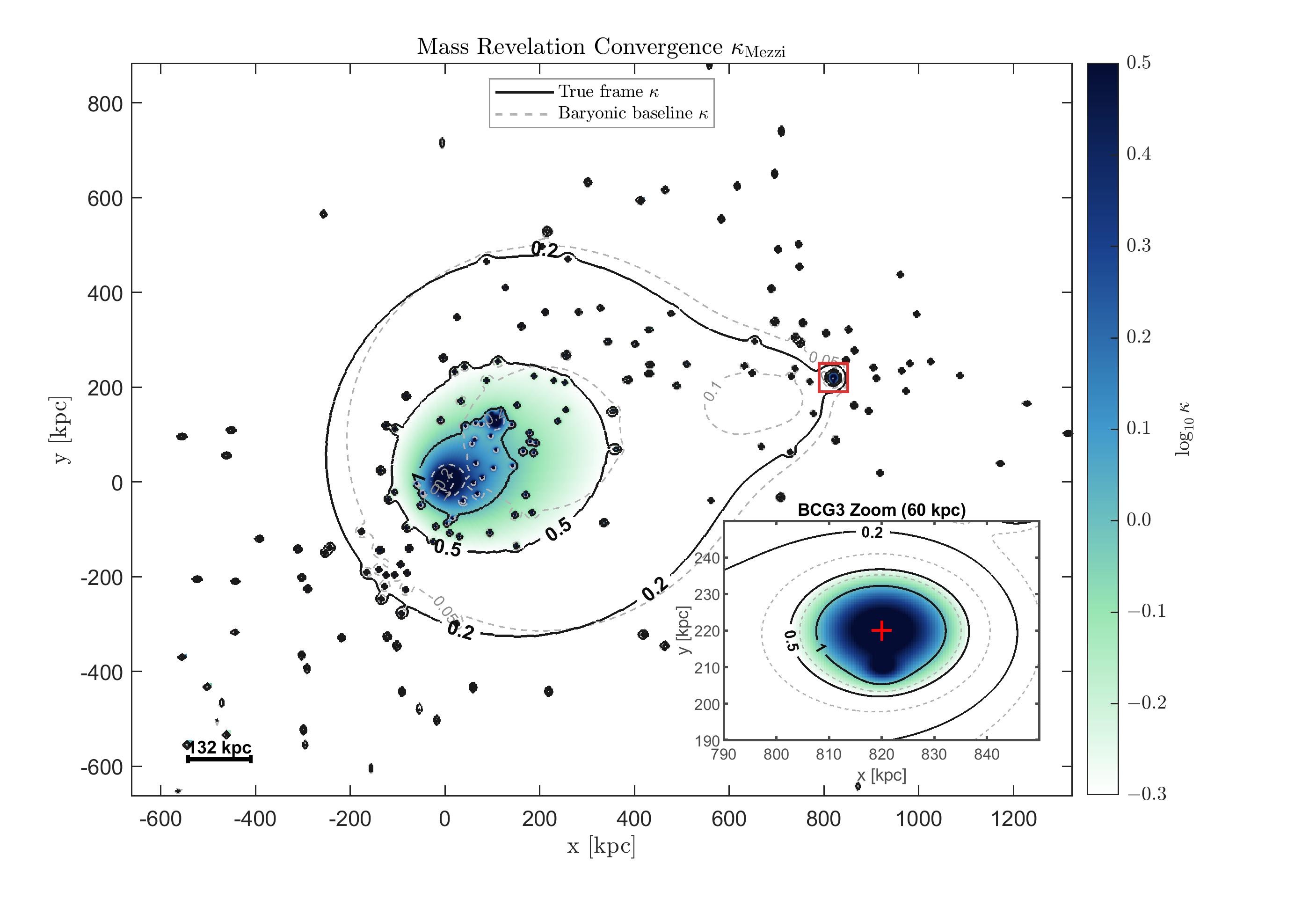
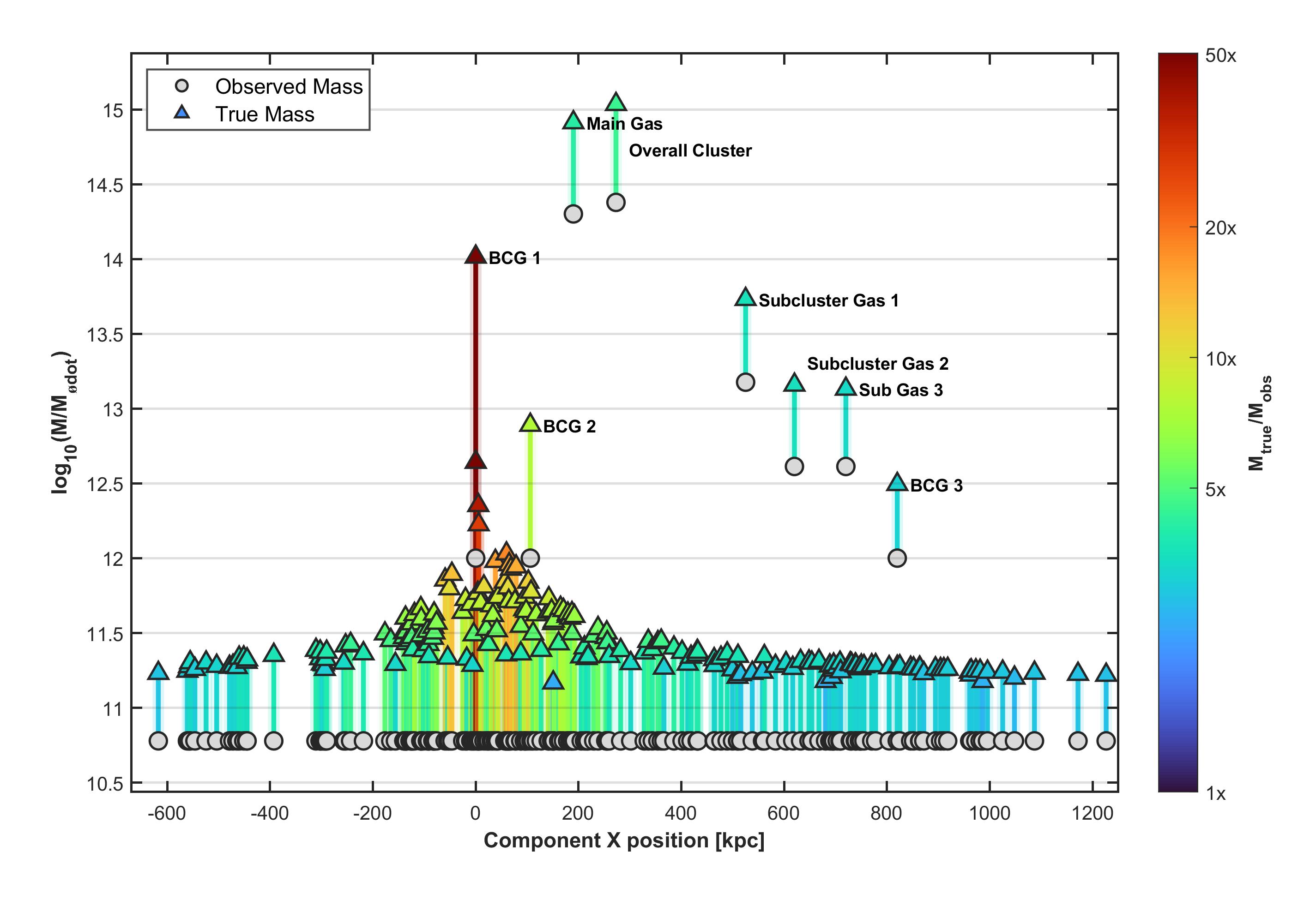
The Bullet Cluster is widely regarded as direct empirical evidence for non baryonic dark matter. We test the Mezzi framework, which poses the "missing mass"problem as a "missing area": a distant observer measures the local baryonic density and surface brightness correctly, but integrates them over compressed coordinates, underestimating the true mass. We correct the apparent compression via a nonlinear Area Jacobian, built from direct ray tracing of the vacuum flow along the light's trajectory and governed by the vacuum compliance constant, \( C \approx 377 \) calibrated on the 175 SPARC rotation curves and held fixed in the present analysis. The resulting True Frame convergence map reproduces the observed strong lensing regions (\( \kappa \geq 1 \)) centered on the collisionless galaxies, with an overall mass correction of \( \eta \approx 4.5 \), without dark matter or modified gravity. The code is available at https://github.com/Brahim-Benaissa/Mezzi_Bullet_Cluster.
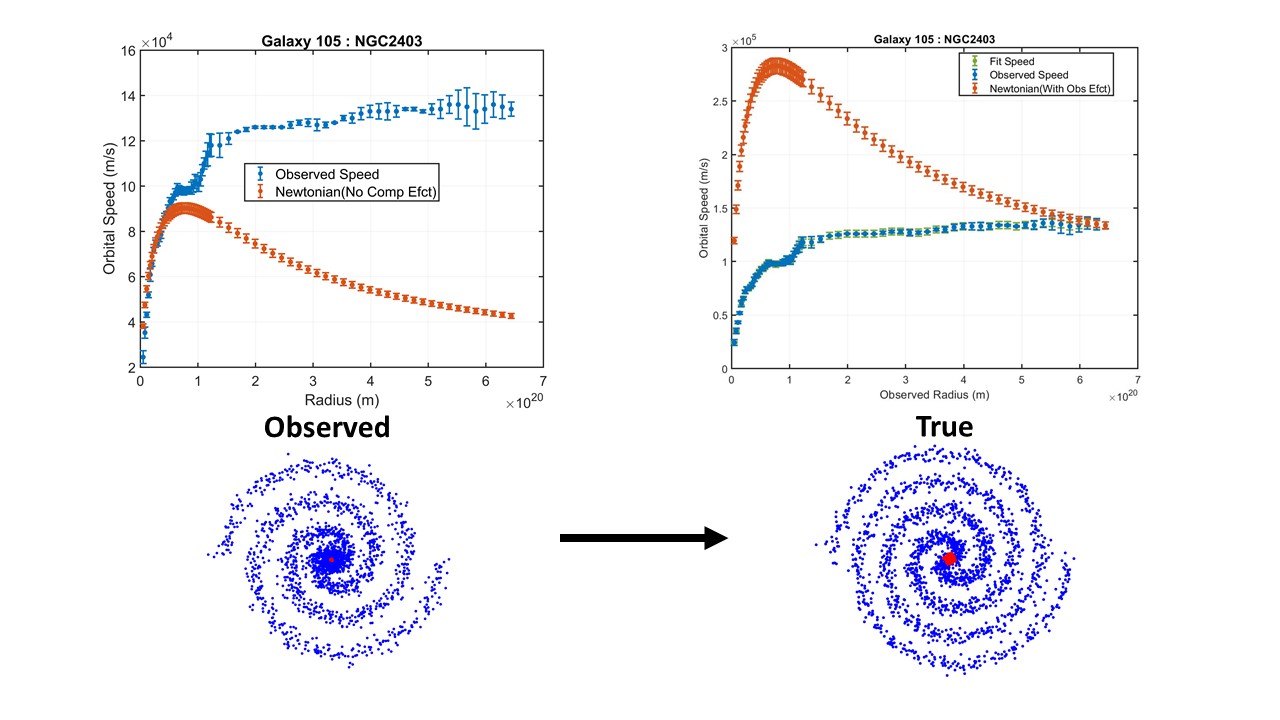
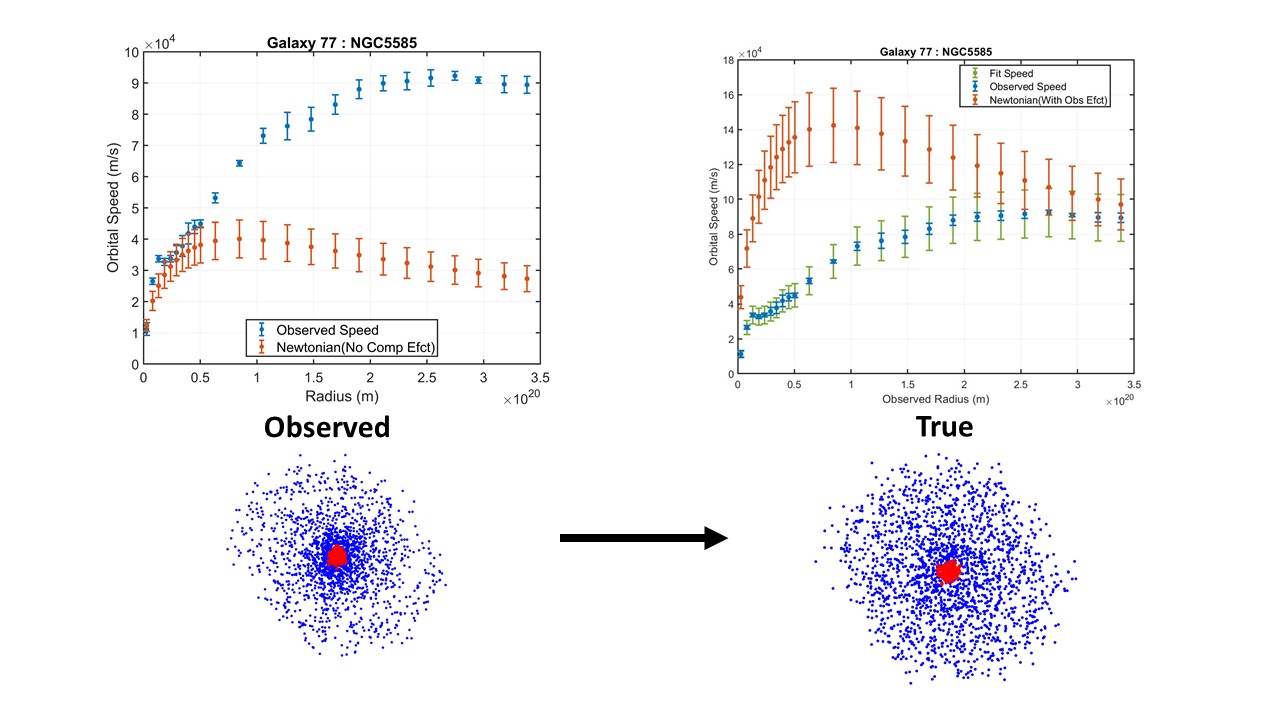
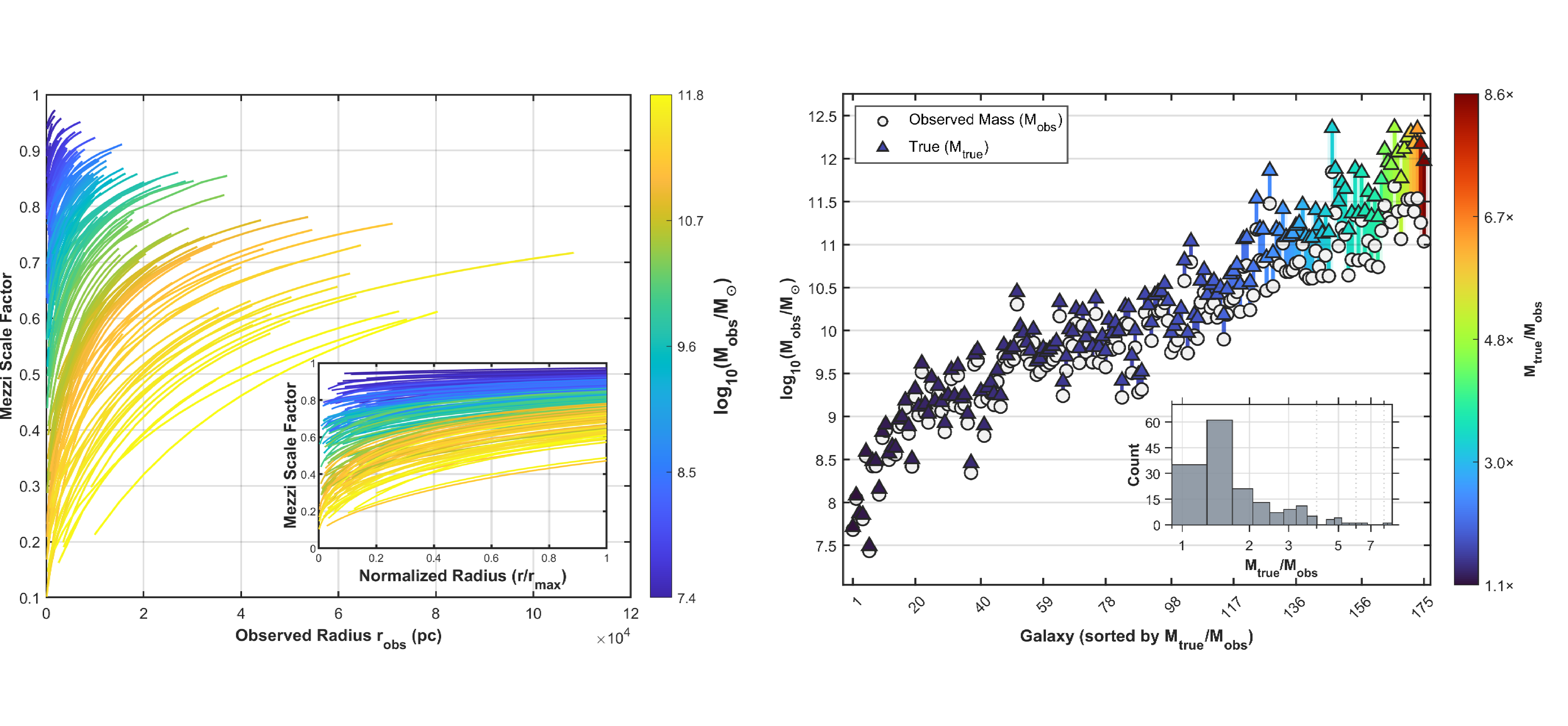
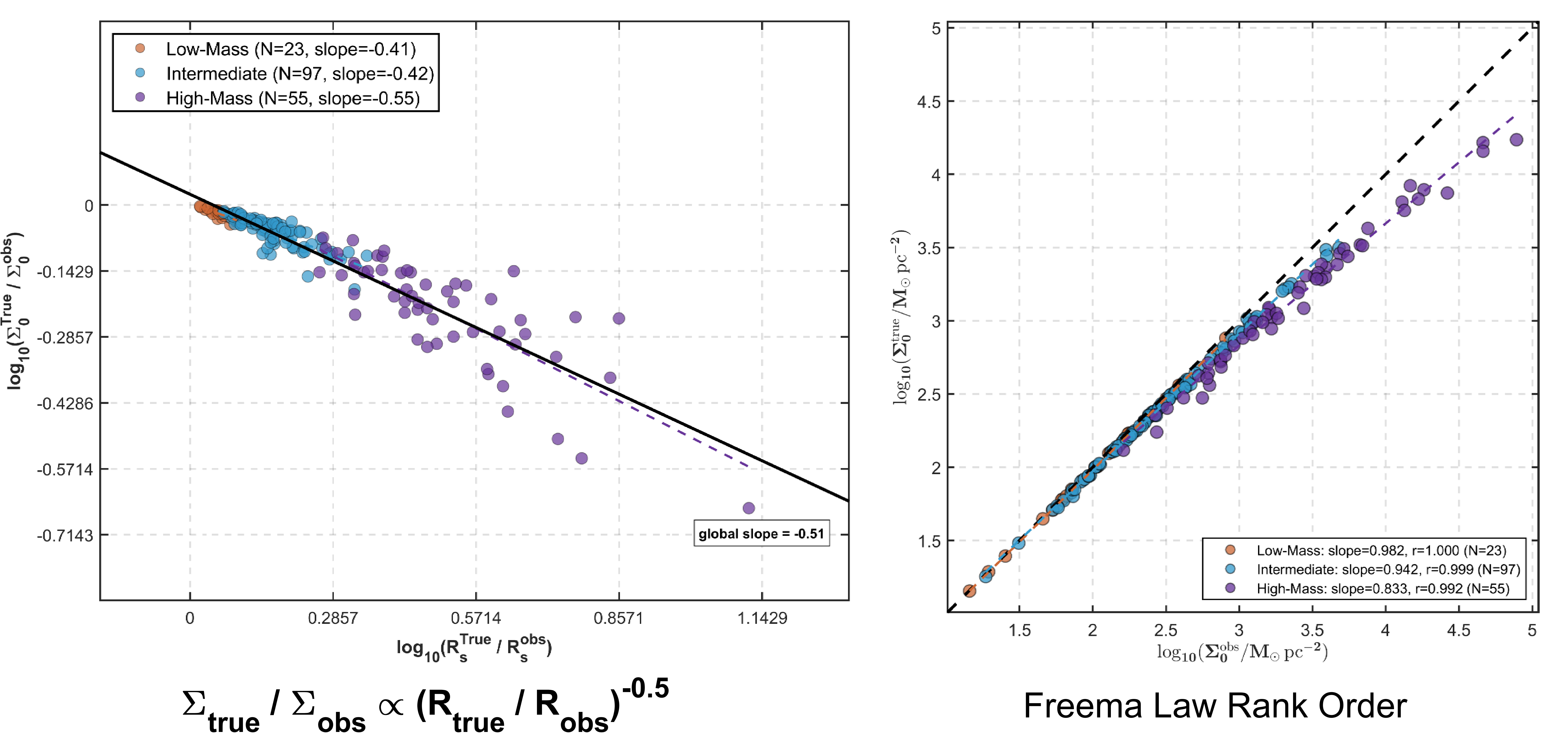
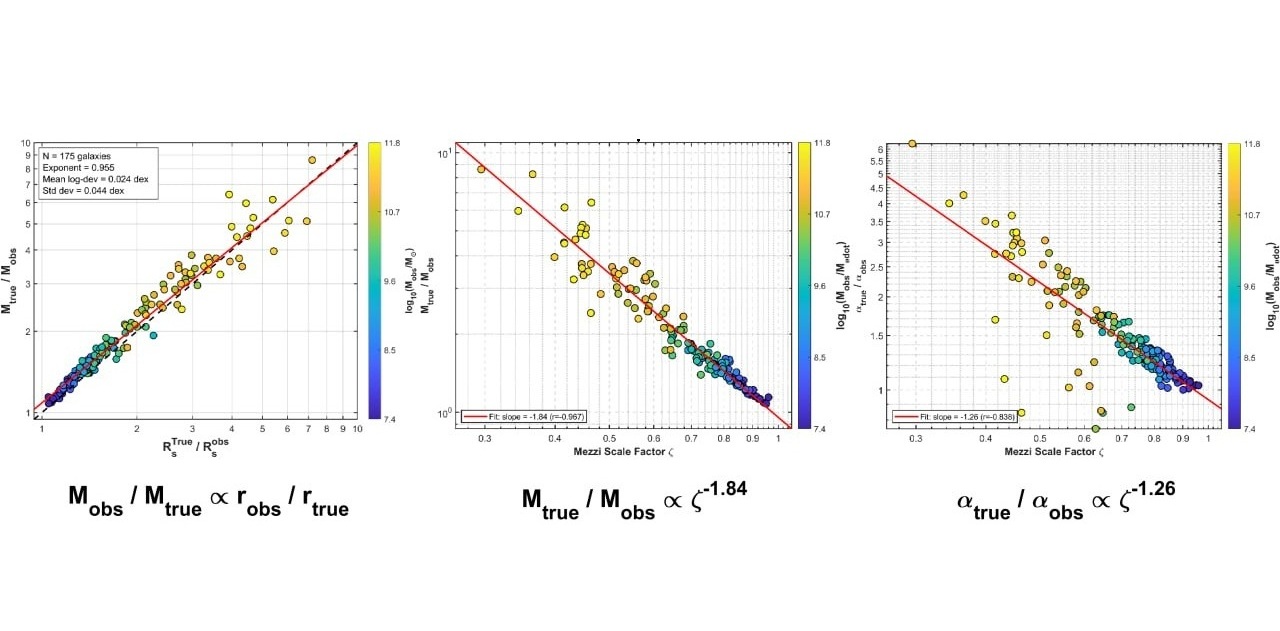
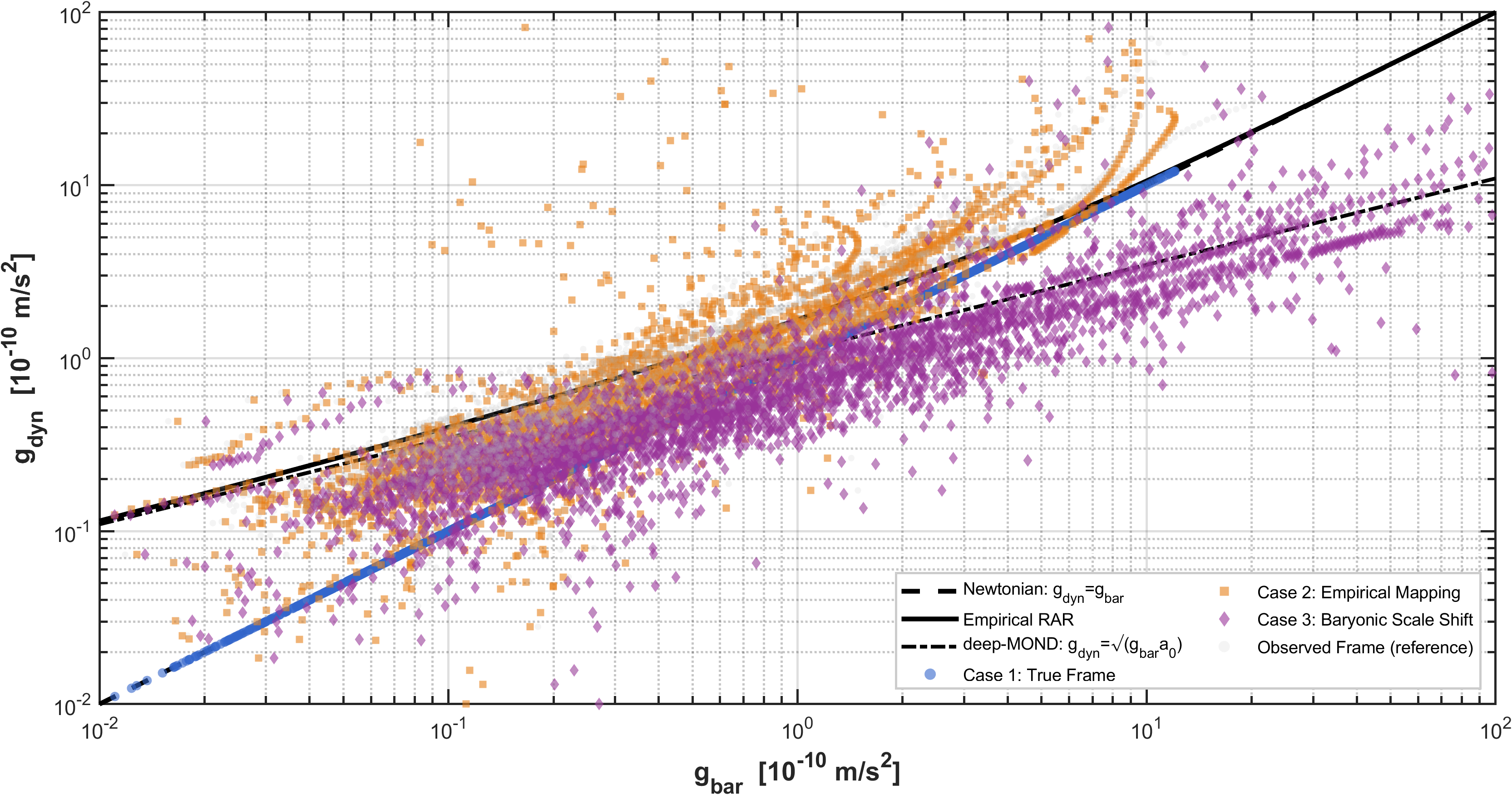
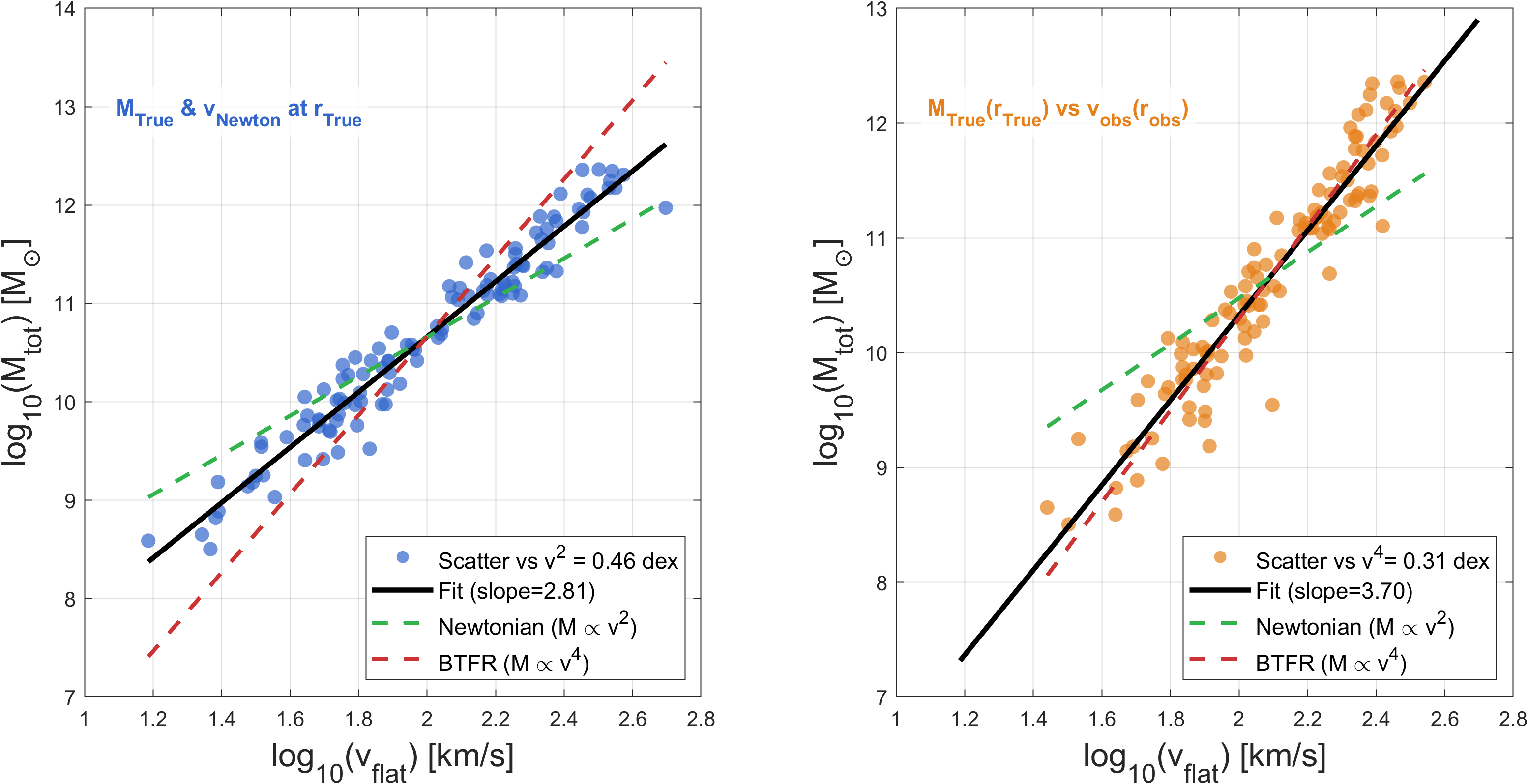
The discrepancy between galactic rotation curves and visible baryonic mass persists despite empirical scaling relations like the Radial Acceleration Relation (RAR) and Baryonic Tully-Fisher Relation (BTFR). We explore a phenomenological framework where this discrepancy arises from the geometric misinterpretation of observables. Inspired by Painlevé-Gullstrand coordinates, we model the vacuum as a radially infalling compliant medium that induces an apparent compression of radial coordinates for distant observers, the "Mezzi effect". Assuming Newtonian dynamics govern an undistorted "true frame", we developed a discrete shell reconstruction method parameterized by a single universal compliance constant, tested against photometric and kinematic data from 175 late type galaxies in the SPARC database. This single parameter model yields universal scaling relations of \(\Sigma_{\text{true}}\text{/}\Sigma_{\text{obs}} \propto \left( R_{\text{true}}\text{/}R_{\text{obs}} \right)^{- 0.5}\) and \(M_{\text{obs}}\text{/}M_{\text{true}} \propto r_{\text{obs}}\text{/}r_{\text{true}}\). And reproduces observed rotation curves (RMS residual \(\sim 34\) km/s). The geometric projection recovers the empirical RAR and shifts the BTFR slope from \(\sim 2.8\ \)in the true frame to \(\sim 3.7\ \ \)in the observer frame, and eliminating the normalization offset. Furthermore, The Mezzi scale factor \(\zeta\) governs mass and lensing corrections via distinct power laws: \(M_{\text{true}}\text{/}M_{\text{obs}} \propto \zeta^{- 1.84}\) and \(\alpha_{\text{true}}\text{/}\alpha_{\text{obs}} \propto \zeta^{- 1.26}\), revealing that geometric scaling affects dynamical mass more strongly than lensing mass. These results indicate that geometric projection effects may offer a viable phenomenological explanation for galactic dynamics while remaining consistent with both Newtonian gravity and weak field general relativity. For reproducibility, the code used for this analysis is publicly available at https://github.com/Brahim-Benaissa/Zeta
If an observational effect induces an apparent spatial compression of galaxies, it may account for the discrepancies in their observed orbital speeds. This study investigates whether the flat rotation curve arise from such an observational effect rather than requiring dark matter or modifications to gravity. Using an inverse problem approach, we demonstrate that Newtonian dynamics remain consistent with observed rotation curves when incorporating a radially dependent space scale factor that maps true spatial dimensions to observed ones. Analyzing 175 galaxies from the SPARC dataset, we find that the intrinsic curvature associated with this apparent compression exhibits a strong correlation with the Ricci curvature derived from the baryonic mass distribution.